
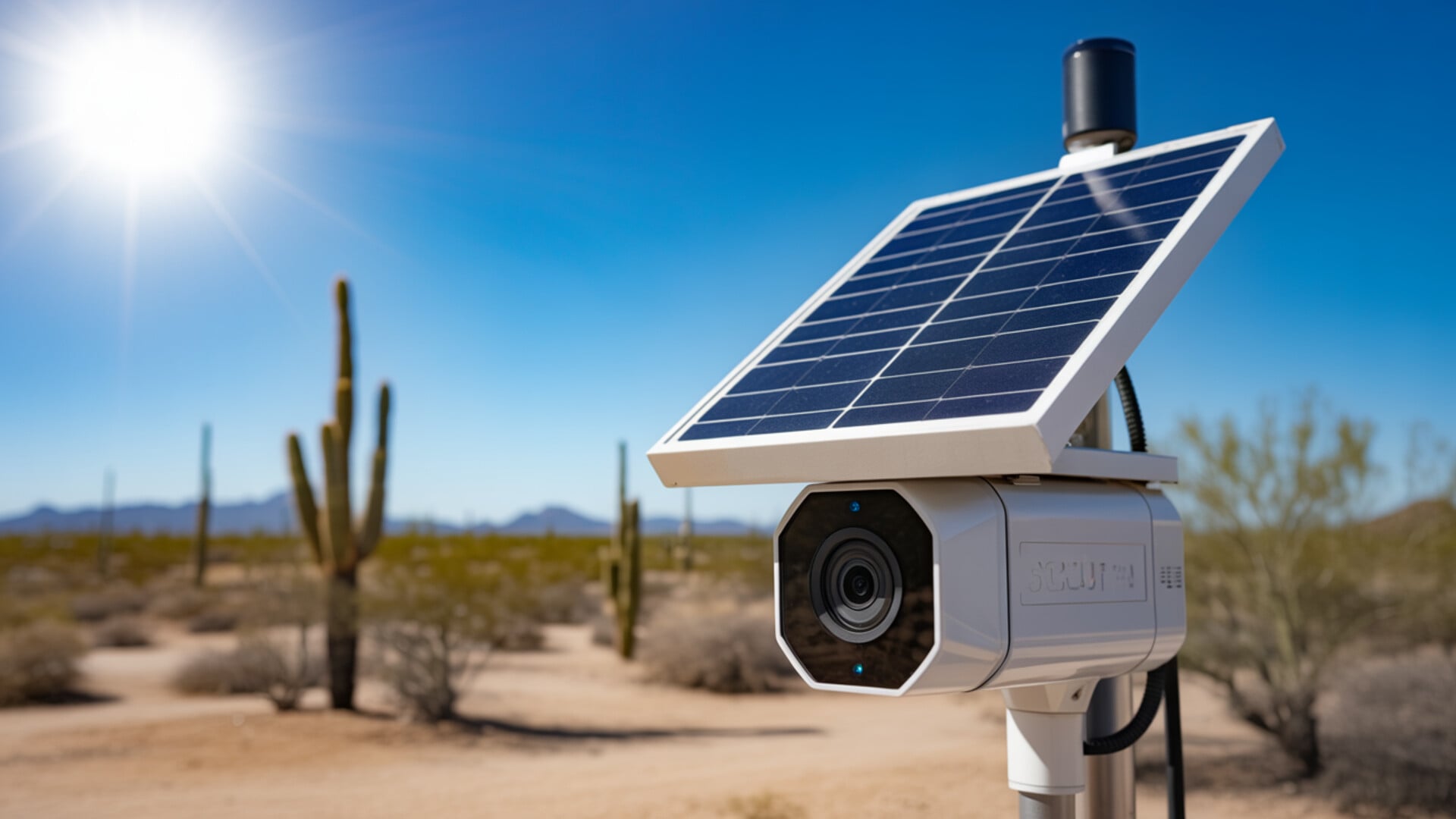
Arizona is, let's say, not gentle on electronics. When it's 115°F in the shade and there is no shade, people naturally wonder: can a solar-powered security camera actually survive out here?
Short answer: yes. We've been deploying them across Arizona since the technology matured, and they work remarkably well — arguably better here than almost anywhere else in the country. Here's why, and what you should know.
Arizona Is Actually Ideal for Solar Cameras
This might seem counterintuitive, but Arizona's climate is one of the best in the U.S. for solar-powered equipment. Phoenix gets about 299 sunny days per year. That's an enormous amount of consistent solar energy — far more than solar cameras need to operate 24/7.
The cameras we deploy are designed for extreme environments. They're rated for operating temperatures from -22°F to 140°F, which covers even Arizona's most brutal summer days. The electronics are sealed and ventilated, and the solar panels actually generate more power here than in most other states because of our intense, consistent sunlight.
How the Solar System Works
Here's the basic setup:
- Solar panel(s) mounted at the top of the camera tower, angled to maximize Arizona sun exposure
- Deep-cycle battery bank that stores enough power for continuous operation, even during cloudy periods
- Charge controller that manages power flow and prevents overcharging in intense heat
- The camera itself — 4K resolution with infrared night vision, drawing relatively little power
- 4G/LTE modem for cellular connectivity and live streaming
During a typical Arizona summer day, the solar panel generates far more power than the system uses. That surplus charges the battery bank, which powers the system through the night and any cloudy periods.
The Monsoon Question
Every client asks about monsoon season (July-September). Fair question. Arizona monsoons can bring days of cloud cover, dust storms, and heavy rain.
Here's the reality: our battery backup systems are rated for 5-7 days of continuous operation without any solar input. That's far longer than any typical monsoon stretch. In practice, even during monsoon season, you get enough partial sun between storms to keep the batteries topped up.
In our 26 years of deploying solar cameras in Arizona, we've had zero complete power failures due to weather. Not one. The systems are designed with Arizona's worst weather in mind.
What About Dust and Dirt?
Dust is a more legitimate concern than heat. Arizona dust — especially on construction sites — can coat solar panels and reduce their efficiency. This is part of why maintenance matters.
When you rent cameras from us, panel cleaning is included in the maintenance. For most sites, panels need cleaning every 2-4 weeks during dusty periods and less often during quieter months. It takes about five minutes per tower — a quick wipe-down keeps them at full output.
Where Solar Cameras Really Shine
Solar-powered cameras aren't just an alternative to wired cameras — in many Arizona scenarios, they're the only practical option:
- Remote highway construction — Miles from the nearest power outlet
- Pre-development land — Monitoring lots before utilities are run
- Solar farm construction — Ironic, but true. These sites often don't have power during construction
- Mining and excavation sites — Remote, spread out, no infrastructure
- Event sites — Temporary setups where running power isn't practical
We deployed 12 solar camera towers along a 3-mile stretch of I-10 highway construction. No power, no internet, middle of the desert. They ran flawlessly for 18 months — zero theft incidents, zero power failures. That's the kind of project where solar isn't just nice to have; it's the only way to get the job done.
The Technology Keeps Getting Better
Solar camera technology has improved dramatically in just the last five years. Panels are more efficient, batteries last longer, cameras draw less power, and cellular connections are faster. What used to be a compromise — choosing solar because you had to — is now genuinely on par with wired systems in terms of video quality and reliability.
If you're working a project anywhere in Arizona where power isn't readily available, solar-powered rental cameras are probably your best bet. And if you've got questions about whether they'll work for your specific situation, just ask us. We've deployed them in pretty much every corner of this state.
Need Help With Your Project?
Our team has been protecting Arizona properties since 2000. Whether you need a temporary rental or a permanent install, we\'re here to help.